Navigating Player Pathways Through Tiered Reward Mechanisms in Online Casino Environments
Written by Devon Schwarz · Aug 17, 2026
Navigating Player Pathways Through Tiered Reward Mechanisms in Online Casino Environments
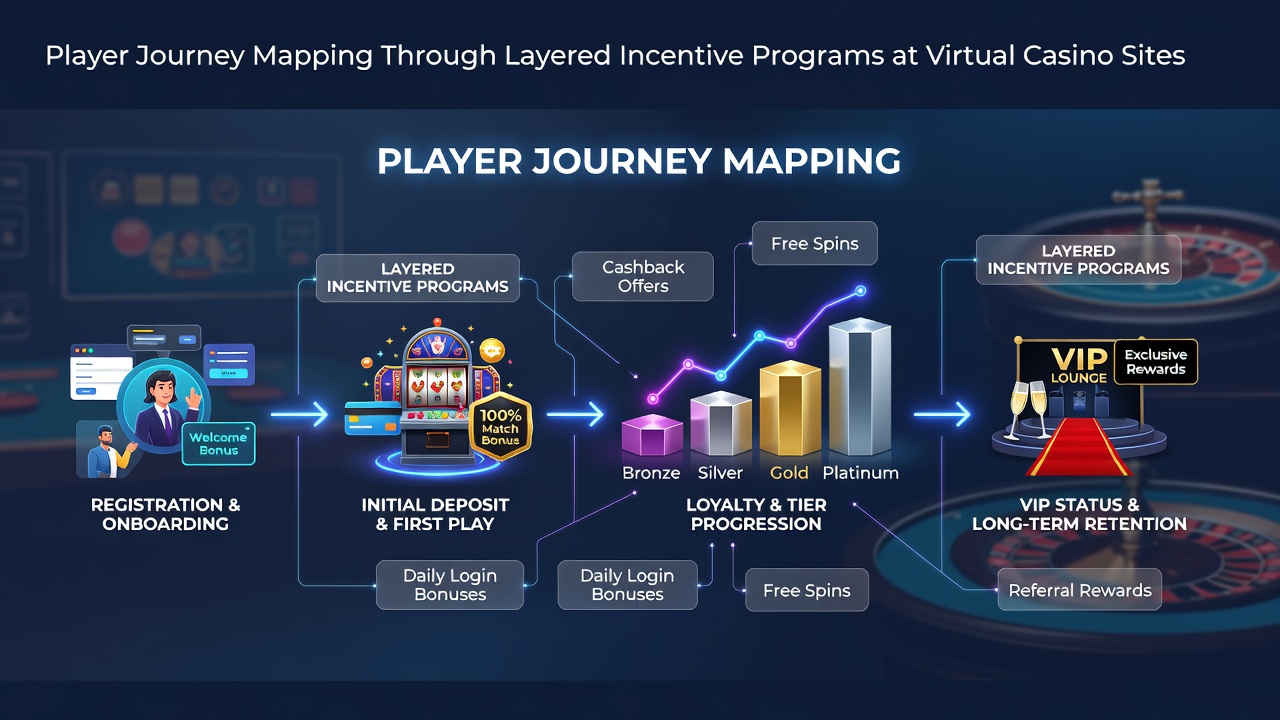
Player journey mapping in virtual casino sites tracks the progression of users from initial registration through sustained engagement via structured incentive layers, and data from industry reports shows these frameworks influence retention rates across multiple regions. Observers note that operators segment rewards into welcome offers, reload structures, cashback tiers, and loyalty programs, each calibrated to specific points along the user path. Research indicates that mapping these elements allows sites to align incentives with behavioral patterns rather than generic promotions.
Defining the Core Components of Player Journey Mapping
Analysts break the journey into acquisition, activation, engagement, and retention phases, while layered incentives provide targeted nudges at each step. For instance, welcome bonuses typically activate during the first deposit sequence, whereas loyalty points accumulate through repeated play cycles. Figures from the New Jersey Division of Gaming Enforcement reveal that operators using segmented mapping report higher conversion from trial to recurring sessions compared wth flat reward models. Those who've studied these systems observe that the mapping process relies on data points such as session frequency, average wager size, and game type preferences to adjust incentive depth.
How Layered Incentives Align With Journey Stages
Registration often triggers an entry-level incentive such as a matched deposit or free spin allocation, yet the real layering begins once users complete verification and make subsequent deposits. Reload bonuses activate on scheduled intervals, cashback programs return portions of losses during extended play windows, and VIP tiers unlock personalized offers based on cumulative activity. Studies from the University of Nevada, Reno Gaming Research Center demonstrate that players who encounter escalating rewards at predictable milestones maintain longer platform relationships than those receiving uniform bonuses. Data shows the transition from early-stage to mid-journey incentives coincides with increased time on site and diversified game selection.
Tracking Behavioral Shifts in Mid-2026
By August 2026, platform analytics indicated that users who received progressive incentives after their third week showed measurable increases in session duration across both desktop and mobile interfaces. Operators apply heat maps and funnel analysis to identify drop-off points, then insert targeted offers such as milestone bonuses or exclusive tournament access to re-engage those segments. External data from the European Gaming and Betting Association highlights that sites integrating real-time journey mapping reduced churn by aligning cashback percentages with individual loss thresholds rather than applying uniform rates. What's interesting is how these adjustments create feedback loops where player actions directly refine future incentive delivery.

Technical Implementation of Mapping Tools
Modern platforms employ customer relationship management systems integrated with behavioral tracking software to visualize each user's position within the incentive hierarchy. These tools segment audiences into cohorts based on deposit velocity, game volatility preferences, and response rates to prior offers. Observers note that such segmentation enables operators to deploy A/B tests on incentive timing, for example comparing immediate reload credits against delayed loyalty multipliers. Research indicates that precise mapping reduces incentive spend waste by concentrating rewards on high-propensity segments while maintaining baseline offers for newer users.
Regional Variations in Layered Program Design
North American operators tend to emphasize cashback and free-play layers tied to sports betting crossover, whereas European and Australian platforms often prioritize slot-specific multipliers within loyalty frameworks. Canadian regulatory filings show increasing adoption of journey mapping to comply with responsible gambling markers, inserting cooling-off prompts at points where incentive layers might otherwise encourage extended sessions. Those monitoring global trends find that cross-regional data sharing among operators accelerates refinement of mapping algorithms without violating local data protection rules.
Conclusion
Layered incentive programs function as sequenced interventions that correspond to documented stages of player movement through virtual casino ecosystems. Mapping these journeys relies on continuous data collection and cohort analysis to maintain alignment between reward delivery and user behavior. Reports from regulatory and academic sources confirm that structured approaches to incentive layering support measurable differences in retention metrics across diverse markets. As platforms refine these systems through ongoing observation, the emphasis remains on matching specific incentive types to precise points in the user progression rather than applying blanket promotions.