Navigating Incentive Layers: How Bonus Codes Shape Retention Patterns Across Live and Mobile Roulette Formats
Written by Devon Schwarz · Jun 25, 2026

Navigating Incentive Layers: How Bonus Codes Shape Retention Patterns Across Live and Mobile Roulette Formats
Bonus codes function as structured entry points that operators deploy to influence how players return to roulette sessions over time, and data from multiple markets shows distinct retention curves depending on whether the format is live dealer or mobile optimized. Researchers tracking player cohorts through 2025 into mid 2026 observed that code triggered offers create measurable differences in session frequency and duration, particularly when live tables compete with mobile apps for the same user base.
Layered Mechanics Behind Code Driven Retention
Operators structure bonus codes across deposit matches, cashback tiers, and free spin allocations that unlock sequentially, which creates an incentive ladder that encourages repeated logins rather than one off visits. Studies released by the Australian Institute of Family Studies in early 2026 indicated that players who activated layered codes returned 28 percent more often within a 30 day window compared with non code users, and the effect held across both live streamed tables and mobile interfaces. The sequencing matters because initial codes reduce perceived entry barriers while follow up codes reward continued activity, which produces a compounding retention loop documented in operator datasets from Canada and parts of the European Union.
Live roulette environments add social timing elements that mobile sessions lack, since real time dealer interactions occur on fixed schedules, and bonus codes timed to those schedules show stronger retention spikes. Mobile formats, by contrast, allow asynchronous play that rewards codes with extended validity windows, because players access them during short breaks throughout the day. Observers note that retention patterns diverge most clearly after the first week, when live users tied to schedule specific codes maintain steadier weekly visit rates while mobile users exhibit burstier patterns driven by push notification triggers.
Comparative Data Across Formats in June 2026
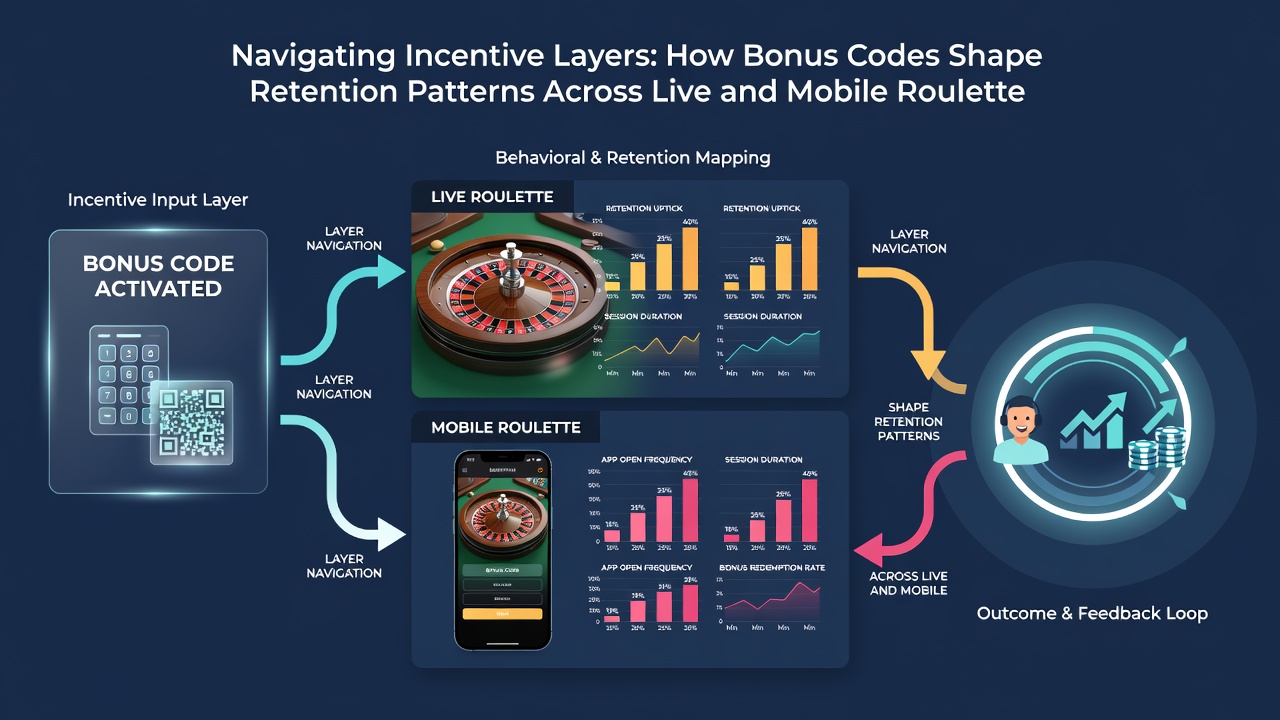
Platform analytics compiled through June 2026 reveal that live roulette operators using time bound bonus codes achieved higher average session lengths, often exceeding 45 minutes per visit, whereas mobile sessions activated by the same codes averaged closer to 22 minutes yet produced more frequent daily touches. One analysis conducted by Canadian gaming researchers found that players crossing between both formats under shared bonus code ecosystems displayed hybrid retention curves, returning to live tables on weekends and mobile apps on weekdays. These cross format behaviors emerged most clearly when codes carried transferable progress trackers that carried value from one interface to the other.
Regional Regulatory Contexts Shaping Code Deployment
Regulators outside the United Kingdom have begun requiring clearer disclosure of code conditions, and data from the New Zealand Department of Internal Affairs shows that transparent terms correlate with sustained retention rather than early drop off. In jurisdictions where codes must display wagering multipliers upfront, operators adjusted their structures toward smaller incremental rewards that still encourage return visits without creating overwhelming obligations. Evidence from these markets suggests that retention improves when players understand the full progression path before committing funds, because surprise restrictions tend to accelerate churn after the first redemption cycle.
Industry reports from the European Gaming and Betting Association further illustrate that mobile roulette codes emphasizing reload flexibility outperform those focused solely on initial deposits, particularly when operators refresh offers on a weekly cadence. Live formats show the opposite trend in some datasets, where one time high value codes timed around major tournament events produce temporary retention spikes that fade unless followed by consistent lower tier offers. The divergence underscores how format specific player expectations interact with code design to shape long term behavior patterns.
Tracking Metrics and Cohort Behaviors
Retention measurement relies on metrics such as day 7 return rate, 30 day active days, and lifetime session count, and operators segment these figures by code type to refine future campaigns. Data aggregated across multiple operators indicates that codes requiring a single qualifying deposit before unlocking subsequent layers tend to stabilize mobile retention more effectively than live retention, where players often prefer codes that reduce table minimums instead. Cohort studies conducted through spring 2026 highlighted that players aged 25 to 34 responded more strongly to mobile code progressions, while older cohorts showed steadier engagement with live dealer codes tied to social features.
Cross platform tracking also reveals that shared loyalty identifiers across live and mobile roulette increase the likelihood of format switching without overall session loss, because bonus code progress remains visible regardless of entry point. This continuity reduces the friction that previously caused players to abandon one format when exploring the other.
Conclusion
Bonus code architecture continues to evolve as operators refine retention tactics across live and mobile roulette channels, with data from June 2026 confirming that layered incentives produce measurable differences in return frequency and format preference. Regulatory shifts in multiple regions have pushed greater transparency into code structures, which in turn influences how players engage over extended periods. Observers tracking these patterns expect continued experimentation with transferable progress systems and format specific reward types as operators seek stable engagement metrics amid changing player habits.